Local business · 5 min read
Pest control websites built around urgency and discretion
Pest problems are urgent and private. Here is how a pest control website should be built to capture both, instead of losing the call to a faster competitor.

Someone finds a wasp nest over the garage, a mouse in the kitchen, or bed bugs in a rented flat, and they want it dealt with today, not next Tuesday. Pest control is one of the most urgency-driven categories we build for, and most of the sites we review in this space still read like a brochure from a decade ago. That costs jobs.
Two things decide whether a pest control website turns a visitor into a booked job: how fast it gets someone to a phone call, and how carefully it protects that person's privacy once they're in the funnel. Get either one wrong and the competitor three results down the page gets the call instead.
Why urgency has to be designed in, not bolted on
Pest problems do not wait for office hours. A homeowner who spots droppings at 9pm is searching right then, usually on a phone, usually ready to call the first company that looks like it will actually turn up. A hero section with a phone number in small text at the bottom of the page is not built for that moment.
76%
of people who search for a nearby business on a phone visit it within a day
Source: Think with Google, local search behaviour research
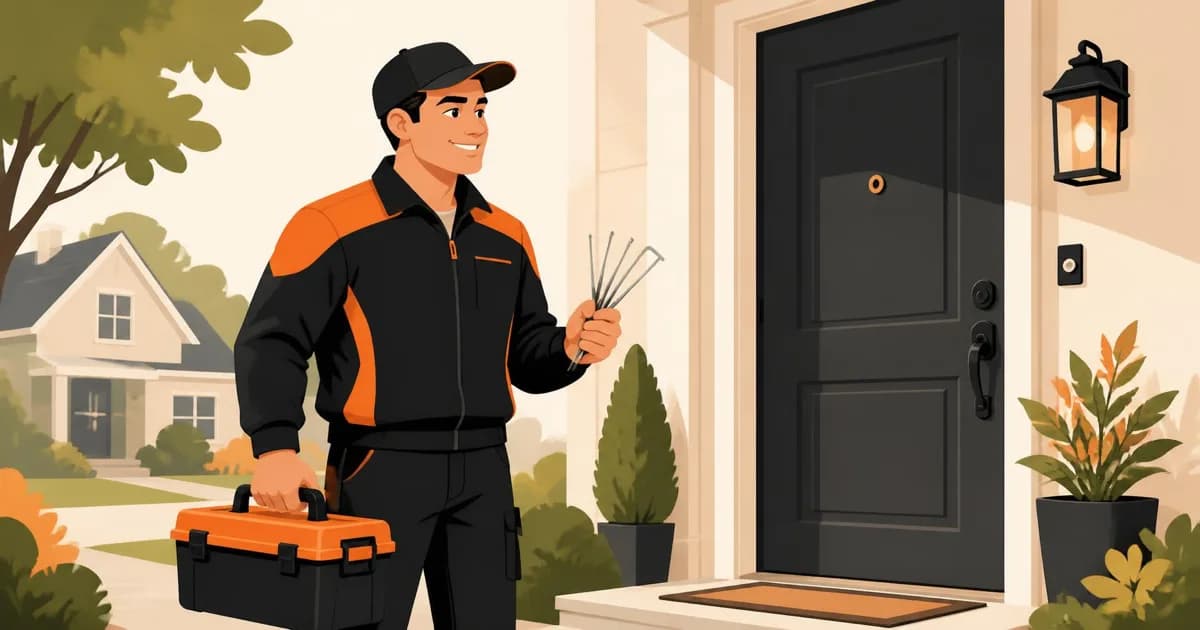
That number is why the call-to-action matters more than the copy around it. The hero needs a one-tap 'Call now' button, not just a number to read and dial manually, plus a stated response window such as same-day callout or on site within two hours, above the fold. If the business genuinely offers 24/7 emergency response, say so in the first screen, not three scrolls down on a Contact page.
Discretion: the part most pest control sites get wrong
Nobody wants a neighbour, landlord or future buyer to find out they had rats or bed bugs by stumbling across their address in a case study. We still see pest control sites publish raw infestation photos, full names on testimonials, and even street-level before-and-after shots. That is a liability for the customer and it quietly kills conversions, because the person reading it starts picturing their own name attached to that page.
What a pest control website actually needs
| Typical pest control site | What actually converts |
|---|---|
| One generic contact form | One-tap call-now button with a stated response time |
| Raw infestation photos | Branded icons or illustrations, no identifiable images of a customer's property |
| A single Pest Control page | Separate pages for ants, wasps, rodents, bed bugs and termites, each matching its own search |
| Testimonials with full names and addresses | First-name-only or anonymised reviews, with a verified badge |
| No follow-up after the job | Automated text or email confirmation, plus a reminder for recurring treatments |
The service-page split matters more than it looks. Someone searching 'bed bug treatment' and someone searching 'wasp nest removal' are in completely different mental states and price brackets, and a single blended page cannot speak to both without diluting the one that actually pays better. This is not something you bolt onto an existing template with a new section; it is the kind of structural change that comes out of a proper web development build rather than a quick edit.
Local pages that match how people actually search
Pest control is relentlessly local. A search for 'wasp nest removal Leeds' and 'wasp nest removal Bradford' are different queries with different intent signals even twenty minutes apart, and a company covering both towns needs a page for each, not one areas-we-cover paragraph buried in the footer. Each town page should carry its own response-time promise, since a company based in one town genuinely can reach it faster than the next one over, and pretending otherwise undersells the local page you are trying to rank.
One-off callouts and recurring contracts need different pages
A homeowner with a wasp nest and a restaurant on a quarterly rodent-prevention contract are not the same buyer, and sending both to the same page wastes the contract lead's higher lifetime value. The one-off page should lead with speed and price clarity. The contract page should lead with compliance, documentation useful for food hygiene inspections, and a named point of contact, because that buyer is evaluating a vendor relationship, not booking a single visit.
- One-off callout page: response time, flat-fee pricing, instant booking
- Contract page: compliance paperwork, visit scheduling, named account contact
- Both: clear service-area coverage and a stated discretion policy
Questions people also ask
Do pest control websites need a separate page for every type of pest?
Yes, if more than one pest drives real search volume for the business. Ants, wasps, rodents, bed bugs and termites each have different urgency, price expectations and search intent, so a dedicated page for each converts better than one page trying to cover all of them.
Is it safe to publish before-and-after photos of an infestation?
Generally no, unless the customer has given explicit written permission and the images do not reveal the property's identity. The safer and often better-converting approach is branded illustrations or stock imagery plus a written description of the work, keeping photographic proof for the customer's private report rather than the public site.
How fast should someone be able to book from a pest control site?
Within two taps from the homepage: one to reach a call button or booking form, one to confirm. Anything that requires reading through service descriptions before finding a way to make contact is losing emergency traffic to a competitor's site that leads with the call button.