Local business · 6 min read
Locksmith websites: getting the call when someone is locked out
Nobody browses a locksmith website. They scan it for response time and price, then call the first one that answers both. Here is how to build that page.
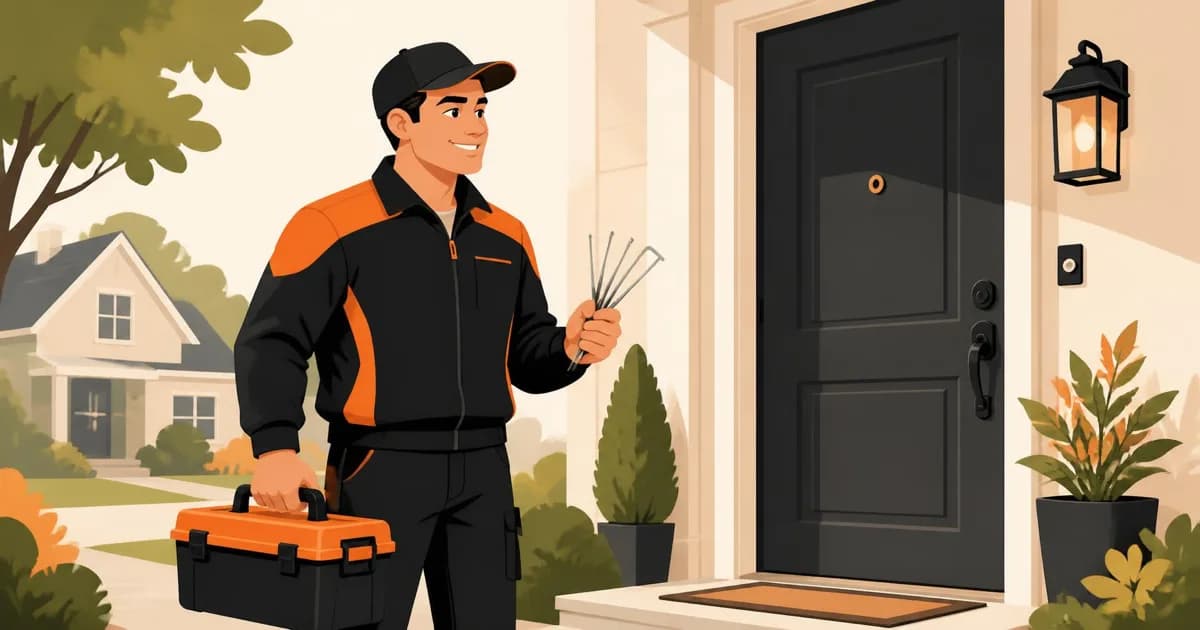
Nobody reads a locksmith website. Someone standing outside their front door, or next to a car with the keys locked inside, opens their phone, searches "locksmith near me," and scans the first three results for about fifteen seconds before they call one. That visitor is not evaluating your brand. They are checking two things: how fast can you get here, and roughly what will it cost. If your site does not answer both before they scroll past the fold, they call a competitor instead, and most of the time they never come back to check who else was on that list.
We build a lot of local trade sites, and locksmiths are the clearest case of a pattern that shows up across every emergency-call business. The visit is not a research session. It is a five-second filter followed by a phone call. Design for that, and the rest of the site (service pages, about page, reviews) becomes support material rather than the main event.
It also means an unanswered call costs a locksmith more than almost any other trade, because the caller is standing outside a door and will not wait. If yours ring out overnight, an AI receptionist can take the address and page you rather than losing the job to the next result in the list.
The two questions a locked-out visitor actually asks
Strip away everything else and a locksmith landing page has to answer, in order: how quickly can someone reach me, and what is this going to cost. Sites that lead with company history, certifications, or a full service menu are answering questions nobody in that moment is asking. Those things matter, but they belong lower down the page, for the smaller share of visitors who are comparing locksmiths in advance rather than dealing with a lockout right now.
| What the site shows | What it should show instead |
|---|---|
| "Fast, reliable service" | "Average arrival time: 22 minutes, 24/7" |
| "Call for a quote" | "Lockouts from $65, car lockouts from $85" |
| Generic stock photo of a locksmith | A real technician, real van, real service area map |
| Contact form as the primary CTA | Click-to-call button fixed at the top of every screen |
Response time has to be a number, not an adjective
"Fast response" and "quick service" mean nothing to someone comparing three tabs at once. A number does the work an adjective cannot: "most jobs reached within 25 minutes" or "average arrival time 22 minutes across [service area]" gives the visitor something concrete to compare against the next site. If you track this internally (and most locksmith dispatch software does), put the real figure on the page. If you do not track it, start, because it is the single strongest piece of copy an emergency-call business can put above the fold.
Coverage area works the same way. "Serving the local area" is vague enough to be useless. A simple list of towns or postcodes, or better, an embedded map, tells the visitor in one glance whether you can actually reach them, which matters more in this category than almost any other kind of local search.
Price transparency removes the biggest objection before it forms
Locksmiths have a trust problem that most trades do not: a well-documented history of callout pricing that balloons once the technician is already at the door. Searchers know this, which is exactly why a visible starting price is worth more on this type of site than on almost any other local trade page. You do not need a full price list. A range for the two or three most common jobs, home lockout, car lockout, lock change, next to a line explaining what changes the price (time of day, lock type, distance) does most of the work.
Local proof beats generic trust badges
Association logos and "licensed and insured" badges are table stakes, worth including but not worth leading with. What actually moves a locked-out visitor is proof that other people nearby, recently, had this exact problem solved. Real Google reviews embedded on the page, ideally filtered to show recent ones first, do more than a certification badge ever will. If you have completed jobs in specific neighbourhoods, name them. Specificity reads as credibility in a way that generic reassurance language does not.
What this looks like on the page
- A sticky click-to-call button visible on every screen, not just the header
- Arrival time and starting price stated in the first screen, before any scrolling
- A short list or map of the towns and postcodes actually covered
- Three to five recent Google reviews, not a rotating carousel that buries the count
- Separate, short sections for the highest-intent jobs: home lockout, car lockout, lock change, safe opening
76%
of people who search for something nearby on their phone visit a business within a day, and most of those visits happen within an hour
Source: Think with Google, micro-moments research
That statistic is why speed of information matters as much as speed of service. A locksmith site that takes six seconds to load, or buries the phone number in a hamburger menu, loses visitors before the call ever has a chance to happen. We treat page speed and a persistent call button as functional requirements for this category, not nice-to-haves, because the search-to-call window is measured in minutes.
Building this without starting from zero
None of this needs a large site. A locksmith rarely needs more than a home page built around the call-to-action block above, three or four service pages for the highest-intent jobs, a reviews section, and a simple coverage area page. What it needs is discipline about what goes above the fold and what gets pushed down. Our web development work for local trades starts from that same brief every time: figure out the one decision the visitor is making, then build the page to make that decision easy, before anything else gets added.
Get that sequence right and the rest of the site does not have to work very hard. Get it backwards, lead with company history and a contact form, and even a beautifully designed site will lose calls to a plainer one that simply answers the two questions faster.
Questions people also ask
What should a locksmith website show above the fold?
A stated arrival time (as a number, not an adjective), a starting price range for the most common jobs, and a click-to-call button. Those three elements answer what a locked-out visitor is actually deciding in the first few seconds.
Does showing prices on a locksmith site scatter away price-sensitive customers?
It does the opposite in this category. Locksmiths have a reputation problem around inflated callout pricing, so a visible starting range builds trust and removes the main objection before the phone call happens, rather than deterring the visitor.
How important is page speed for an emergency-call business like a locksmith?
Very. The searcher is comparing several sites in the same short window, often on a phone with a weak signal outside a building. A slow-loading page loses the call to a faster one even if the underlying business is a better fit.