Conversion · 5 min read
Abandoned carts: the five points where your checkout loses people
Cart abandonment isn't random. It happens at five predictable points in your checkout, and most of them cost nothing to fix.
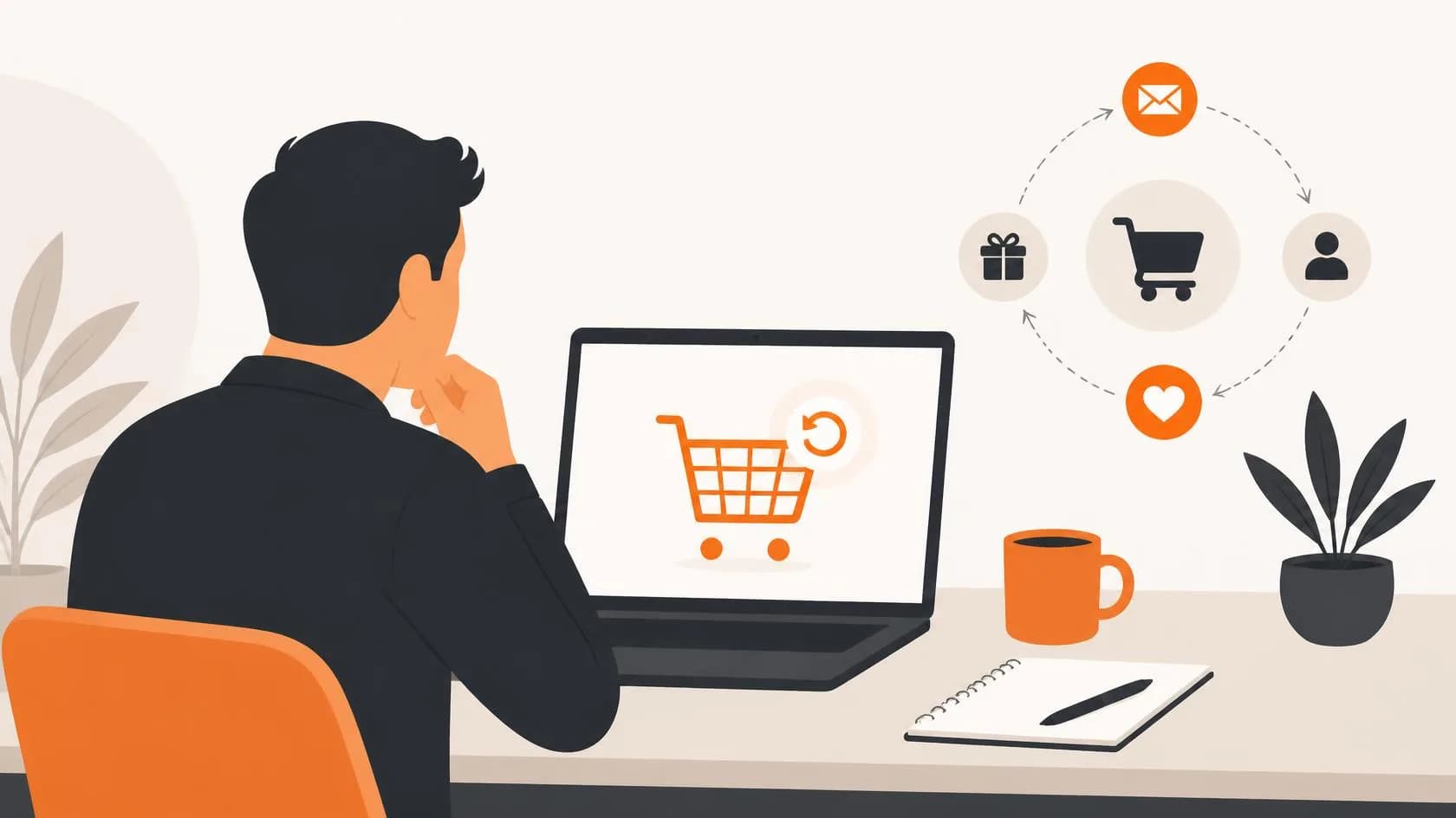
Seven out of ten shoppers who add something to their cart never buy it. That number holds across almost every industry we've looked at, and it's tempting to write it off as normal internet behaviour. It isn't. Cart abandonment is concentrated at a handful of specific points in the checkout flow, and once you know where they are, most of them are cheap to fix.
Why checkout is where you lose the sale, not the homepage
Store owners spend most of their attention on the top of the funnel: ads, product photography, landing pages. That's understandable, but it's also why checkout gets neglected. By the time someone reaches checkout they've already decided to buy. They've picked a product, checked the price, and clicked "add to cart." If they leave after that, something in the next two or three screens actively pushed them out. That's a much more fixable problem than "not enough traffic," and it's usually cheaper to solve.
The five points where people actually leave
1. Forced account creation
Asking someone to create a password and verify an email before they've paid you is asking for a second commitment before the first one is done. Guest checkout should always be the default, with account creation offered afterward, once the order is placed. We've seen this single change recover sales on stores that had no other checkout problems at all.
2. Hidden or late-shown shipping costs
This is the biggest one. Shoppers price a product mentally, get to the final screen, and see shipping, tax, and fees added on top for the first time. That gap between the number they expected and the number in front of them is where most abandonment happens. Show shipping cost, or at least a clear estimate, on the product page or cart page, not on the last step.
3. Too many form fields
Every field is a small decision point, and every decision point is a chance to stop. A checkout that asks for a company name, a phone number, a delivery note, and an account preference before it asks for payment is a checkout that gives people four extra reasons to close the tab. Ask only for what you need to fulfil and ship the order.
4. No visible security or payment trust signals
People are handing over card details to a business they may be buying from for the first time. A recognisable payment logo, an SSL padlock that's actually visible, and a clear returns policy link at the final step all reduce hesitation at the exact moment it matters most.
5. A slow or broken final step
We still find stores where the payment step takes four or five seconds to load, or throws a generic error on a valid card because of a misconfigured payment gateway. At that point in the funnel, every extra second of load time or every unclear error message is a full lost sale, not just a delay.
~70%
average online shopping cart abandonment rate across industries
Source: Baymard Institute, cart abandonment research
| Checkout problem | Typical fix | Effort to fix |
|---|---|---|
| Forced account creation | Enable guest checkout, offer account creation after order | Low |
| Shipping cost shown too late | Display shipping estimate on cart or product page | Low |
| Too many form fields | Cut fields to name, address, contact, payment only | Low |
| Missing trust signals | Add payment logos, visible SSL, returns policy link | Low |
| Slow or error-prone payment step | Audit gateway config, test error handling on real cards | Medium |
What we do differently when we build a store
- Guest checkout on by default, account creation optional and after purchase
- Shipping and tax estimates visible before the final payment screen
- Checkout forms limited to the fields actually needed to ship the order
- Payment and security trust signals placed at the exact step where card details are entered
- Load time and error handling on the payment step tested with real transactions, not just the happy path
If you're running an online store and haven't looked at checkout abandonment specifically, our e-commerce development work usually starts with exactly this kind of audit before we touch anything else.
The fix is rarely "add more marketing"
It's common for store owners to respond to a high abandonment rate by increasing ad spend or adding a discount popup on exit intent. Both can help at the margins, but they're treating a symptom. If seven out of ten carts are lost at checkout, the highest-leverage fix is checkout, not the top of the funnel. Get more people through the five points above and every marketing dollar you're already spending converts better without spending more.
None of this requires guesswork. Most checkout tools now show you exactly which step shoppers drop off at. Pull that report before you change anything, confirm where your specific store is losing people, and fix that point first.
Questions people also ask
What is a normal cart abandonment rate?
Averages sit around 70% across industries, though it varies by sector and device. The average is not a target; most of it comes from a handful of fixable checkout problems rather than genuine disinterest.
Does offering guest checkout actually increase sales?
Yes. Requiring account creation before checkout adds friction at the point where a customer has already decided to buy. Making it optional, and offering it after the order is placed, consistently recovers sales without any downside.
Should I show shipping costs before checkout?
Showing an estimated shipping cost on the product or cart page, rather than only at the final step, reduces the gap between what a shopper expects to pay and what they actually see, which is the single biggest driver of abandonment.