Local business · 8 min read
Builders and roofers: showing work that wins bigger jobs
For builders the website has one main job: proving you can do this before anyone has met you. Here is how to build a portfolio that does that, and how to filter out the jobs you do not want.
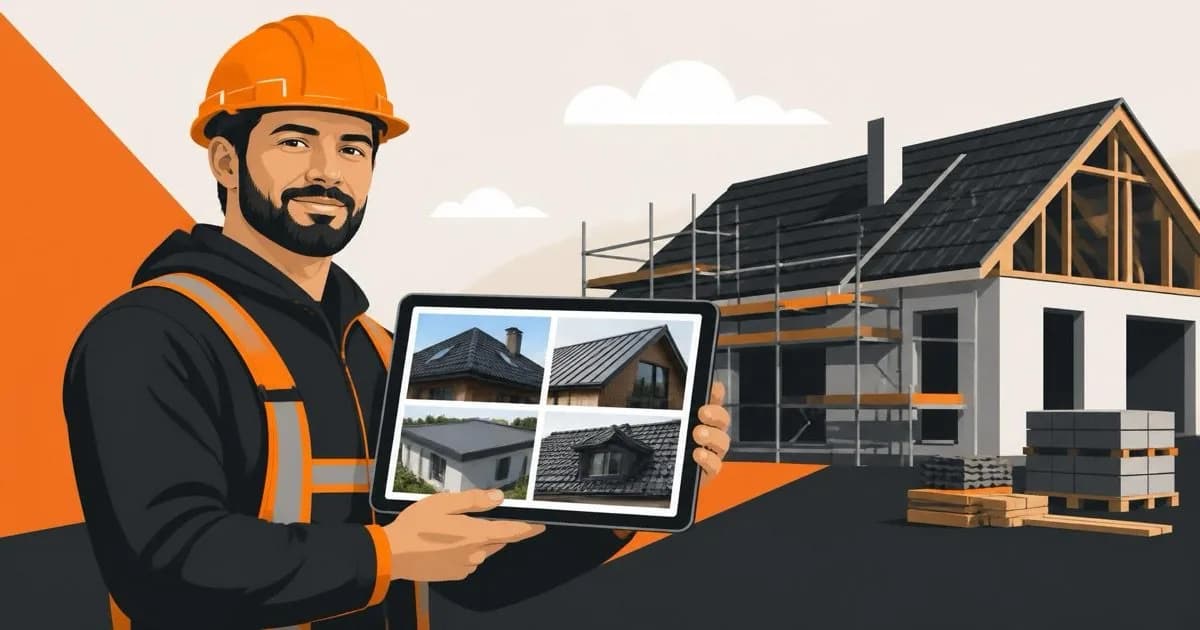
A homeowner about to spend a serious sum on an extension, a new roof or a full renovation is taking a risk with someone they have never met. Everything on a building company's website exists to reduce that risk. The photographs do most of the work.
A gallery is not a portfolio
Most builder websites have a page of thumbnails with no captions. It proves you have done work, which the visitor assumed anyway, and answers none of the questions actually in their head.
A project that persuades is told as a short story, and it does not need to be long:
- 1What the customer wanted. One or two sentences. 'A two storey side extension to add a kitchen diner and a bedroom above.'
- 2What was difficult about it. Access, planning, a period property, working around a family living there. This is where competence shows.
- 3How long it took. People are desperate to know this and almost nobody publishes it.
- 4Before, during and after photographs. During is the one everyone skips and the one that proves the work is yours.
- 5Roughly what it cost, or the band it sat in. Even a range helps a reader work out whether to enquire.
Photograph the process, not only the result
Finished photographs are beautiful and slightly suspicious, because they could be anyone's. Progress photographs of the footings going in, the steel being craned over, the roof stripped back, the site left tidy at the end of the day are the ones that prove the project was yours and that you work cleanly.
Ask your site manager to take a handful of photographs a week on a phone. It costs nothing and after a year you have a genuine library rather than a scramble for images when the website is being rebuilt.
The trust section that actually matters
For work at this value, the customer's real fear is that you take a deposit and vanish, or that something fails in two years and nobody answers the phone. Address that directly:
- Insurance. Public liability, and the figure. Not a vague claim that you are fully insured.
- Guarantees and warranties. What is covered, for how long, and whether it is backed by anyone else.
- Trade memberships and accreditations, with numbers where they can be checked.
- How payments are staged. Publishing that you take staged payments against milestones, rather than a large deposit up front, is genuinely reassuring.
- Reviews that mention project types. A review naming a loft conversion is worth more to the next loft conversion enquiry than a general five stars.
Qualify before you drive there
The most expensive thing in a building business is time spent quoting work that was never going to happen. A website can filter a surprising amount of that before it reaches your diary.
The gentle way to do it is to be specific about what you do and who you do it for. Stating the size of project you take on, the areas you cover and a rough starting point for common jobs does not lose you good enquiries. It loses you the enquiries that were going to waste an afternoon.
Your enquiry form can help too. Asking for the type of project, the property, a rough budget band and a timescale takes the customer a few extra seconds and tells you before you ring whether it is worth a visit.
Roofing has its own urgency
Roofers straddle two worlds. A planned re-roof behaves like a building project, researched over weeks. A leak after a storm behaves like an emergency callout, decided in minutes.
If you do both, build for both. Keep the portfolio for the planned work, and give the emergency visitor the same treatment an emergency plumber needs: a tappable phone number, your coverage area, and a plain statement about how quickly you can get there.
Questions people also ask
How many projects should be on a builder's website?
Six to ten properly written up does more than a gallery of sixty untitled photographs. Choose projects that match the work you want more of, and give each one a short story: what the customer wanted, what was difficult, how long it took and what it roughly cost. Depth persuades, volume does not.
Should I put prices on a building or roofing website?
Not fixed prices, because no serious project can be quoted from a web page. Bands help though. Saying that single storey extensions typically start from a certain figure lets a reader decide whether to enquire, and stops you quoting for people whose budget was never close. It is a filter as much as a selling point.
What should I ask for in the enquiry form?
Enough to decide whether to visit, and no more. Type of project, property type, rough budget band, timescale, and their contact details. Every additional field loses some enquiries, so only ask for things that genuinely change your response.
Do builders need a website if most work comes from referrals?
Referrals still check you online before ringing. When someone recommends you, the next thing that happens is your name goes into Google, and whatever they find there either confirms the recommendation or undermines it. For referral heavy businesses the website is less about generating leads and more about not losing the ones you already earned.