Automotive · 5 min read
Bodyshop and repair websites for insurance and private work
A bodyshop runs two businesses on one set of ramps: insurance-referred work and private-pay work. Most bodyshop websites are built for neither. Here's how to fix that.
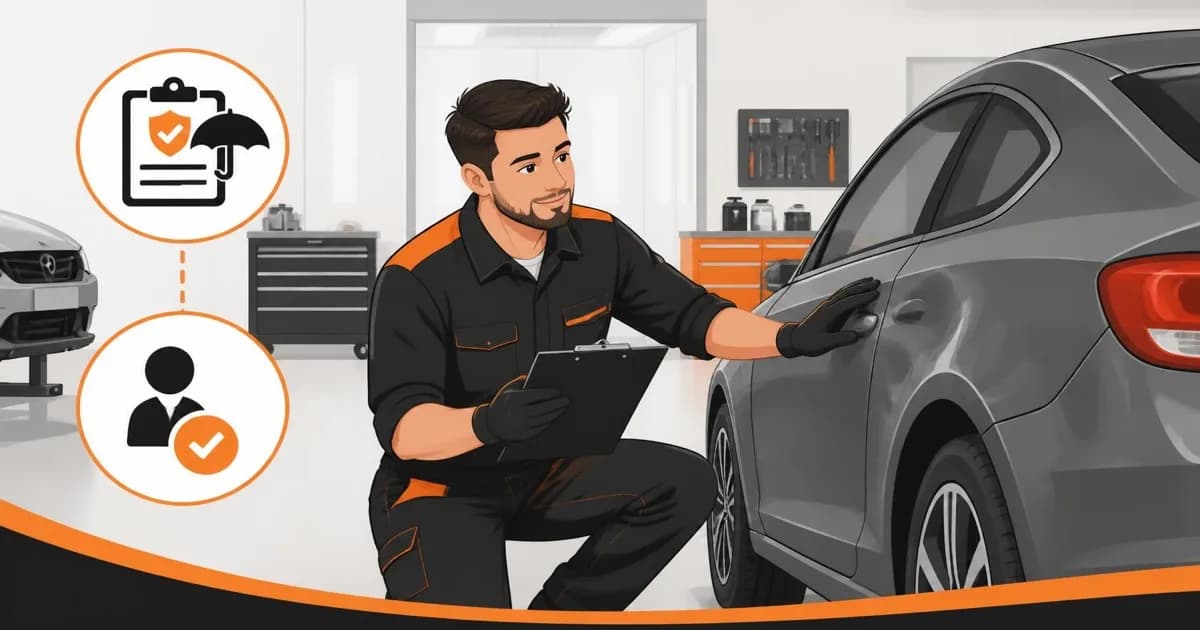
A bodyshop runs two businesses on one set of ramps. One customer was sent to you by an insurer after a claim. The other found you on Google after a scrape in a car park and is paying out of their own pocket. They land on the same homepage expecting completely different things, and most bodyshop websites are built for neither of them.
Two customers, two decisions
The insurance-referred customer usually did not choose you on price. Their insurer gave them your name, or a shortlist that included you, and now they want reassurance that the process will go smoothly: that the claim will be handled correctly, that the car will come back right, and that they will not be stuck without transport. They are rarely shopping around on your website. They are checking you are legitimate.
The private-pay customer is the opposite. Nobody sent them. They are comparing two or three local bodyshops, want to know roughly what a respray or a dent repair costs, and want to see proof the work looks good before they commit. Price and evidence matter far more to this visitor than accreditation badges.
Build a site around only one of these journeys and you lose the other type of enquiry without ever knowing it happened.
What the insurance-referred visitor is looking for
- Approved repairer status and manufacturer accreditations, shown clearly, not buried in a footer
- A plain-English explanation of how the claims process works and what the customer needs to do
- Courtesy car or loan car availability, stated upfront
- A realistic turnaround time, even as a range
- A phone number that is easy to find on a mobile screen, because many of these visitors are calling from the roadside
What the private-pay visitor is looking for
- A clear idea of pricing, even if it is a starting-from figure or an instant quote form
- Before-and-after photos of real repairs, not stock images of a generic garage
- Reviews, ideally recent ones mentioning the type of repair they need
- A list of services broken out by job type: dents, scratches, resprays, alloy wheel refurbishment, bumper repair
- An easy way to book or request a quote without picking up the phone first
Why one homepage for both usually fails
Put both sets of content on a single page and you end up with a wall of badges and process explanations that a price-comparing private customer skims past, or a pricing table and gallery that an anxious insurance customer has no use for. Neither visitor finds their answer fast, and both leave.
| Insurance-referred visitor | Private-pay visitor | |
|---|---|---|
| What they need first | Proof you are legitimate and approved | Proof the work looks good |
| Primary content | Accreditations, claims process, courtesy car | Pricing, gallery, reviews |
| Best call to action | Call us about your claim | Get a free quote |
| Search intent example | approved bodyshop near me | car dent repair quote |
Structuring the site so both paths work
The fix is not a better homepage paragraph. It is a split at the top of the homepage that sends each visitor down the right path immediately: one button for "My insurer sent me here" and one for "I'm paying for this myself." Each leads to its own landing page built around what that visitor actually needs, with its own headline, its own proof, and its own call to action.
This also solves an SEO problem most bodyshops do not realise they have. "Approved bodyshop near me" and "car dent repair quote" are different search intents with different competitors, and Google rewards a page that commits to one over a page that tries to cover both. Two focused landing pages will consistently outrank one page trying to do double duty.
We build this split structure as part of our standard web development process for repair and garage clients: a homepage that routes visitors fast, two dedicated landing pages underneath it, and a gallery and review section both paths can link into.
The pages that actually convert for bodyshops
- 1Homepage with a clear insurance versus private split near the top
- 2An insurance-approved repairs page listing accreditations, process and courtesy car details
- 3A private repairs and pricing page with service breakdown and an instant quote option
- 4A before-and-after gallery, linked from both paths
- 5A reviews page or section pulling in recent Google reviews
- 6A contact and booking page with a mobile-first click-to-call button
Questions people also ask
Do customers have to use the bodyshop their insurer recommends?
In most cases no. Insurers can suggest an approved repairer, but the customer usually has the right to choose their own bodyshop. That is exactly why an insurance-focused landing page matters: it is your chance to make the case before the customer defaults to the insurer's suggestion.
How long does it take for a new bodyshop landing page to show up in search results?
Expect a few weeks for Google to index and start ranking a new page, and longer to see meaningful rankings for competitive local terms. Clear on-page structure, accreditation details and genuine reviews all help it move faster.
Should a bodyshop publish fixed prices for private repairs?
Fixed prices are hard to commit to since every repair is different, but a starting-from range or an instant quote form gives price-conscious visitors enough to decide whether to get in touch, which is usually enough to stop them clicking back to a competitor.