Professional services · 5 min read
Care home websites written for the family, not the resident
Nobody searching for a care home at 11pm is the person who will live there. It's almost always family. Here's what a website needs to earn their trust.
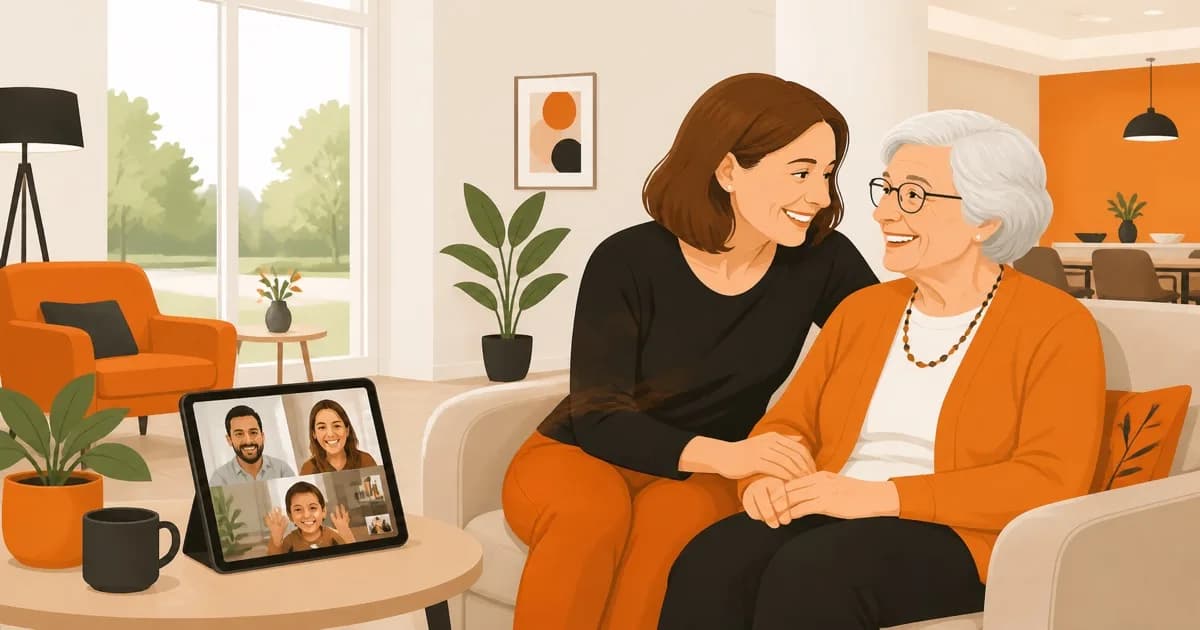
Nobody searching for "care home near me" at 11pm is the person who will live there. It's almost always a son, a daughter, or someone holding power of attorney, trying to make a decision about a parent while juggling work, their own kids, and a growing sense of guilt. If your website is written for the resident, you're writing it for the wrong reader.
The decision-maker is never the resident
Sometimes this is planned over months. More often it starts with a hospital discharge date, a fall, or a diagnosis that makes staying at home unsafe. The family member doing the searching is usually tired, anxious, and comparing five tabs at once. They are not reading your mission statement. They are scanning for the three or four facts that tell them whether to pick up the phone.
What that family member is actually checking for
- Is this home rated well, and by whom, not just a star rating with no source
- What does a typical day actually look like for a resident
- What's the staff-to-resident ratio, especially overnight
- Can I see real rooms and communal areas, not brochure photography
- How much does it cost, and what's actually included at that price
- Can I book a visit without having to call during office hours
19%
of people arranging care for a relative checked CQC inspection ratings directly during their research, far behind directories (55%), general online search (40%) and word of mouth (38%)
Source: Log my Care and Care England, National Report on How Families Find and Choose Care, 2026
That stat matters more than it looks. Most care home sites assume their CQC rating will do the trust-building for them, buried as a badge in the footer. Most families never go looking for it. If your site doesn't put the rating, the detail behind it, and the human reassurance in front of them directly, you've left your strongest asset unused.
Most care home websites are still written for a brochure, not a browser
| Typical care home website | One built for the decision-maker |
|---|---|
| Homepage headline: "Welcome to [Name] Care Home" | Headline that names the actual decision: "Finding the right level of care for your parent" |
| Stock photography of smiling older adults | Real photos of the actual rooms, communal spaces and named staff, with consent |
| Pricing hidden behind "call for a quote" | A clear starting range and a plain list of what's included at that price |
| CQC rating missing or buried in the footer | Rating shown prominently near the top, linked to the actual report |
| One generic contact form | A visible phone number on every page plus a book-a-visit option that doesn't require a call |
Trust signals matter more than design polish
A clean layout helps, but it isn't what closes the decision. What closes it is specificity: named staff with real bios and tenure, a straight answer on cost, and family testimonials that read like they came from an actual person rather than a marketing line. We've seen the same pattern on other trust-driven service pages: the sites that convert are the ones willing to be specific where competitors stay vague.
The enquiry path has to work for someone who is stressed, not casually browsing
A long contact form with eight required fields is a filter against people in a hurry, and right now, in a hurry is most of your audience. Put a click-to-call number in the header on every page, not just the contact page. Offer a short "request a call back" option for people who don't have the energy for a conversation today but still want to move forward. Make booking a visit a calendar, not a form that disappears into an inbox.
Build it like you're the only honest option in the results page
Families comparing care homes are not comparing features. They're comparing how safe each option feels to trust with someone they love. A site that shows real rooms, real staff, real pricing and a real rating earns that trust faster than one more polished page of stock photography ever will. That's the brief we build to every time a care provider asks us for a new site.
Questions people also ask
Who usually decides on a care home, the resident or their family?
In the large majority of cases it's a family member or someone with power of attorney doing the research and making the final call, often under time pressure. Your website needs to speak to them directly, not just the person who will eventually live there.
Do people actually check CQC ratings before choosing a care home?
Less often than most care homes assume. A 2026 survey by Log my Care and Care England found only 19% of people arranging care checked CQC ratings directly, relying instead on directories, general search and word of mouth. That makes it more important to surface your rating clearly, not just link to it.
What's the one feature every care home website needs that's often missing?
A clear, honest answer to "what does this cost" and a way to book a visit or request a call back without having to phone during office hours.